
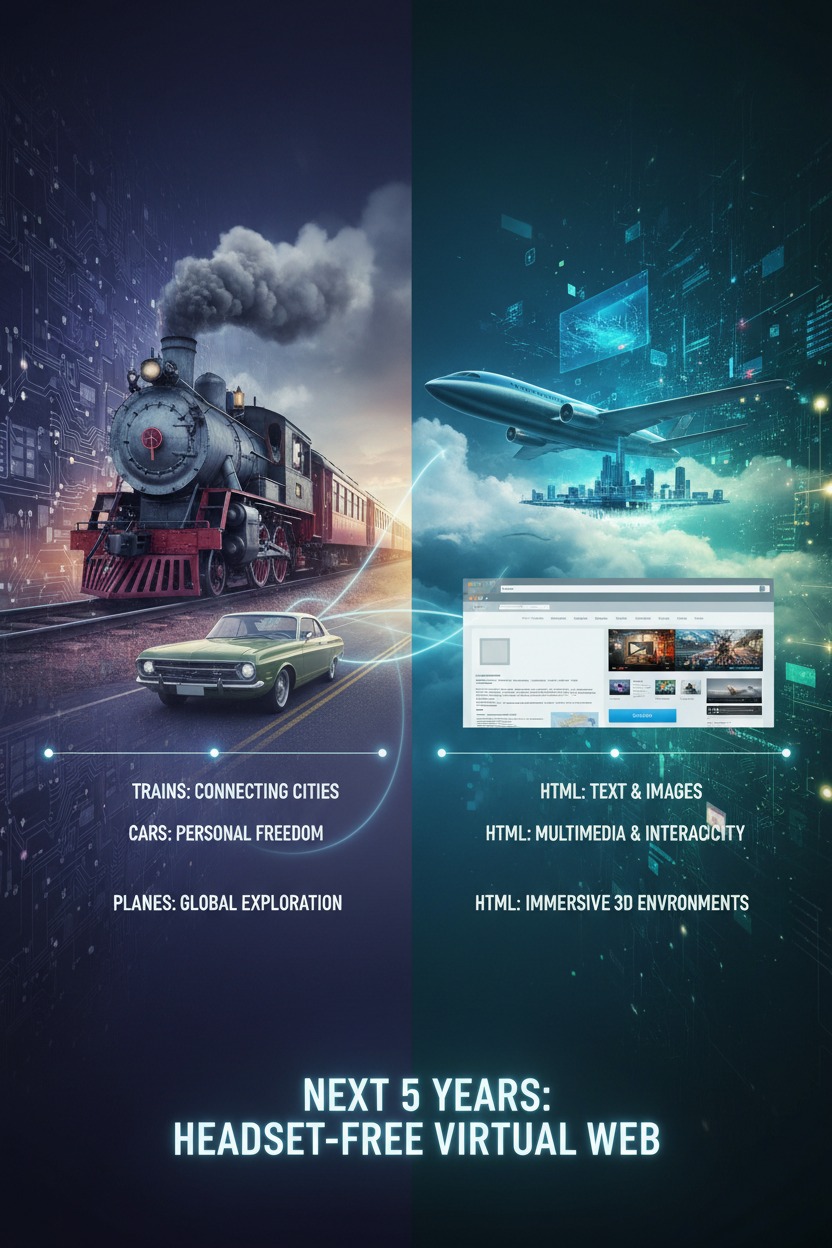
In the rapidly evolving world of web development, HTML stands at a fascinating crossroads, much like the transportation services we rely on daily—trains, cars, and planes. Just as these modes of travel have transformed over the decades, enabling faster and more immersive journeys, HTML and the web are undergoing a similar revolution. Today, HTML powers the backbone of nearly every webpage, providing structure and content for a vast array of services and experiences. But what if we could leap forward five years into the future? Imagine web pages that are not just flat documents but dynamic, interactive 3D environments accessible directly through your browser—no headset required. This emerging frontier promises to redefine how we experience the internet, blending the lines between traditional websites, virtual reality, and augmented reality. In this post, we’ll explore where HTML is today, what innovations are on the horizon, and how these advancements could transform internet visuals, webpage 3D graphics, and immersive experiences in the near future.
“Sometimes, the simplest moments hold the deepest wisdom. Let your thoughts settle, and clarity will find you.”
To understand this journey, consider the evolution of transportation itself. Trains once revolutionized travel by connecting cities, cars brought personal freedom on the roads, and planes opened the skies to global exploration. Similarly, HTML started as a simple language designed to share text and images but has grown into a powerful tool capable of supporting complex multimedia, interactive elements, and now, immersive 3D environments. Current technologies like WebGL and WebXR are already pushing the boundaries, allowing developers to create 3D graphics and virtual experiences that run smoothly in browsers. Experts predict that within five years, advances in these technologies will make immersive, headset-free virtual environments commonplace on everyday websites. This shift could herald a new era where browsing the internet feels less like reading a book and more like stepping into a fully interactive world—transforming education, entertainment, commerce, and beyond. As we explore this new frontier, it becomes clear that the future of HTML is not just about coding but about creating experiences that bring us closer to the digital and physical worlds seamlessly.

Imagine the interior of a modern airplane cabin. Each passenger seat is equipped with a personal screen embedded in the back of the seat in front. These screens display vibrant 3D or VR content, such as interactive maps showing the flight path in three dimensions, immersive virtual tours of destinations, or even VR games that passengers can control with handheld devices. The cabin lighting is dimmed to enhance the visibility of the screens, and passengers are wearing lightweight VR headsets or using glasses provided by the airline for a fully immersive experience. The overall atmosphere is futuristic and high-tech, emphasizing comfort and entertainment during the flight.
Wrapping Up with Key Insights
In closing, this vision of a modern airplane cabin shows how immersive technology can fundamentally reshape the travel experience. By integrating 3D visuals, VR entertainment, and interactive content directly into each passenger’s journey, flights become more than a means of transportation—they become engaging, personalized experiences. The core message is clear: when comfort, innovation, and thoughtful design intersect, even long hours in the air can feel inspiring rather than exhausting.
As you reflect on these ideas, consider how immersive technologies already influence your daily life, from virtual meetings to interactive learning and entertainment. The same principles apply here: meaningful engagement, intuitive design, and purposeful use of technology can transform routine moments into memorable ones. Whether you’re a traveler imagining the future of flight, a designer exploring user-centered experiences, or a business leader thinking about innovation, the takeaway is to embrace tools that deepen connection and enjoyment.
A compelling future isn’t built all at once—it starts with small, practical steps. Stay curious about emerging technologies, experiment with immersive media where possible, and think critically about how innovation can enhance human comfort and connection. By doing so, you carry forward the article’s central theme: the future of travel, like the future of everyday life, belongs to those willing to imagine, explore, and thoughtfully apply what they’ve learned.
Leave a Reply