
What Would Happen If We Put a Computer in Orbit?
From solar power and radiation to cooling, communications and future orbital civilisation, computing above Earth could change what we mean by a data centre.
What if the computer of the future did not sit in a building on Earth? What if its processors, solar panels and communications equipment were placed hundreds of kilometres above us, turning orbit into a new kind of computing environment?
That idea sounds like science fiction, but in 2026 it is becoming an engineering question. Google is preparing Project Suncatcher, a research programme investigating whether AI computing infrastructure could operate in space. Google says its first prototype is intended to test how its Tensor Processing Units cope with radiation, thermal extremes, vibration and the other realities of orbital operation. citeturn0news0
The fascinating question is not simply whether a computer can work in orbit. It is whether an entire computing ecosystem could eventually live there.
1. Solar power could be the great attraction
One of the strongest arguments for orbital computing is sunlight. In low Earth orbit, a satellite can spend substantial periods outside Earth’s shadow, and Google says its concept could ultimately access much more solar energy than an equivalent solar installation on Earth. citeturn0news0
For a future orbital computer, large solar arrays could provide electricity without relying on a terrestrial grid. That could be particularly interesting as AI systems demand ever more electricity.
2. But space is not a giant refrigerator
This is where the science becomes surprising.
Space is extremely cold, but there is no atmosphere around an orbiting spacecraft. On Earth, data centres can use air, water and liquid cooling systems to move heat away from processors. In vacuum, convection cannot carry heat away in the normal way. A spacecraft must ultimately reject its waste heat as thermal radiation.
That means an orbital AI computer needs radiators. They could become large, heavy and technically important parts of the spacecraft. Recent technical analysis identifies thermal management as one of the major constraints on orbital data centres. citeturn0search17turn0search23
3. Radiation would attack the electronics
Earth’s atmosphere and magnetic field provide significant protection from the space environment. An orbiting computer has much less protection and can be exposed to energetic particles and radiation that can cause errors or gradually degrade electronics.
Designers therefore have to think about radiation-tolerant components, shielding, error correction, redundancy and the possibility of replacing failed hardware. The European Parliament’s research briefing on orbital data centres highlights radiation, thermal management and maintenance as central engineering challenges. citeturn0search23
4. How would orbital computers talk to Earth?
A computer is only useful if it can communicate. An orbital data centre could use radio links, but future systems may increasingly depend on high-bandwidth optical links between satellites.
Google’s Project Suncatcher concept envisages clusters of satellites communicating with one another using lasers. Precise pointing is required because both spacecraft are moving rapidly relative to one another. Google says it plans to test this technology in a later phase of the programme. citeturn0search16
5. Why put the computer beside the data?
There is another reason orbital computing could make sense: sometimes the information is already in space.
Earth-observation satellites can collect enormous quantities of imagery and scientific data. Instead of sending everything to a ground station, an intelligent satellite could analyse the information in orbit and transmit only the important results.
That could mean faster responses for weather monitoring, disaster assessment, scientific observations, navigation and spacecraft operations.
6. Could computers eventually build an orbital civilisation?
This is where the idea moves from today’s engineering into tomorrow’s science fiction.
Imagine a future in which orbit contains networks of specialised computing satellites. Some harvest solar energy. Others provide storage. Others process scientific information. Laser links connect the network, while autonomous spacecraft inspect, repair and replace modules.
Such a system would not necessarily be a single giant computer. It could be more like a distributed city of machines, operating continuously above Earth.
In a much more distant future, orbital infrastructure could support manufacturing, communications, scientific laboratories and autonomous spacecraft. Computing would become one of the basic utilities of space, alongside power and propulsion.
7. The time-travel connection
For a time-travel story, orbital computing presents an intriguing thought experiment.
A civilisation in 2126 might look back at today’s data centres in much the same way we look at early mainframes: enormous machines, tied to a particular location, with physical limits that later generations learned to overcome.
Perhaps future computers will be distributed across Earth orbit, the Moon and eventually deeper into the Solar System. Each generation of infrastructure could move computing farther from the planet while making it increasingly autonomous.
Today’s orbital AI experiments may be small, but they ask a very large question: does the future of computing belong entirely on Earth?
The first step is already happening
Project Suncatcher is still an experiment rather than a space-based replacement for terrestrial data centres. Google’s own description emphasises that the programme is starting by learning whether AI hardware can survive and operate reliably in orbit. citeturn0news0
That distinction matters. The engineering case for orbital computing remains uncertain, and major questions remain around heat rejection, radiation, launch costs, servicing, communications, debris and economics. citeturn0search17turn0news6
But experiments like Suncatcher turn an idea once associated mainly with science fiction into something that can be tested.
The big question
If solar-powered computers can survive radiation, reject their heat and communicate efficiently, could the first building blocks of an orbital computing civilisation already be taking shape?
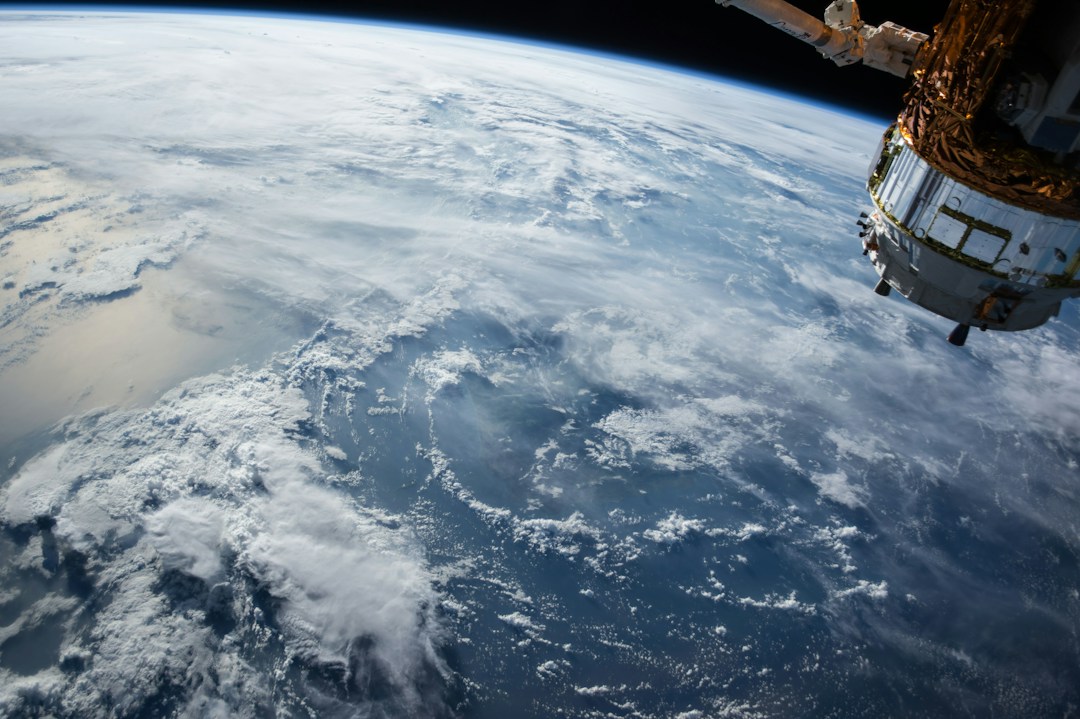
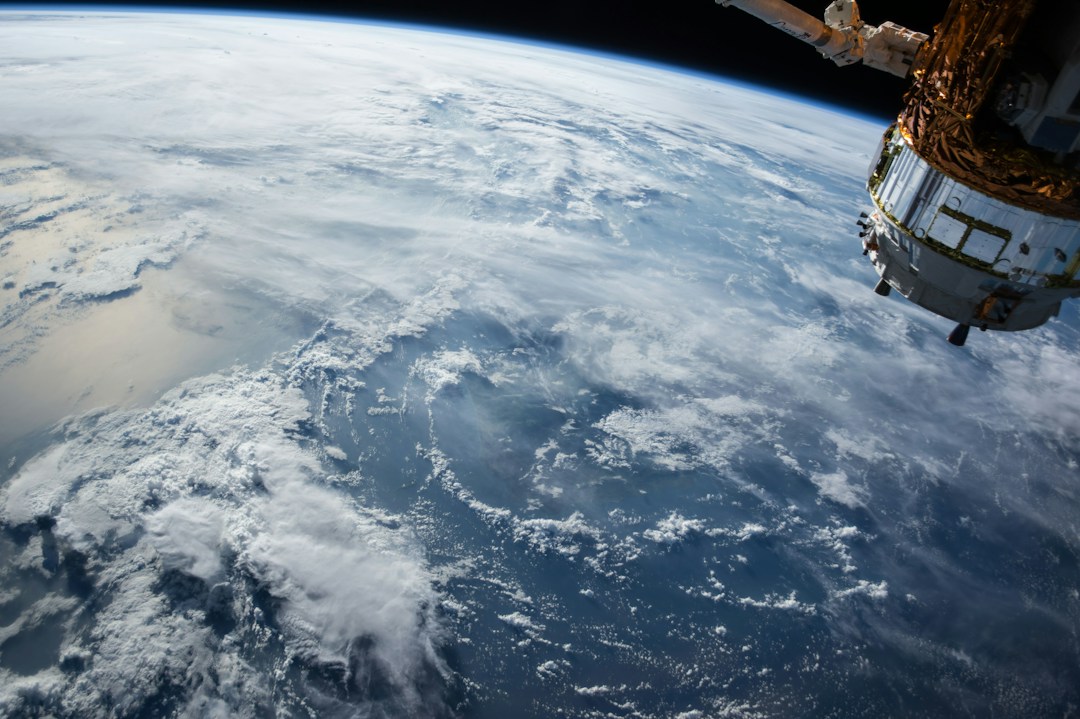
Image credit: NASA / Unsplash. Representative image; it is not an image of Google’s Project Suncatcher hardware.
Sources: Google Research – Project Suncatcher; European Parliament Research Service – orbital AI data centres; ITIF – Policy Considerations for Orbital Data Centers; IEEE Spectrum; Ars Technica.
Leave a Reply