What if you could travel into the past and change the event that made your own birth possible? That simple question leads to one of the most famous puzzles in the study of time travel: the Grandfather Paradox.
What Is the Grandfather Paradox?
Imagine a time traveller journeys back several decades and encounters their grandfather when he is still young. The traveller somehow prevents their grandfather from having the child who would eventually become the traveller’s parent.
If the grandfather never has that child, the traveller is never born. But if the traveller is never born, they cannot travel back in time to interfere with their grandfather’s life in the first place.
The puzzle is a conflict between cause and effect: the time traveller’s action appears to remove the very conditions required for that action to have happened.
Why Is It a Paradox?
In ordinary experience, causes precede their effects. A person is born before they can grow up, build a time machine and travel into the past. The Grandfather Paradox asks what happens when a journey into the past appears to reverse that relationship.
It is important to distinguish the thought experiment from established science. No experiment has demonstrated that humans can travel into their own past, and the paradox is mainly a way of examining what a consistent theory of backwards time travel would require.
Possible Solutions
1. The Past Cannot Be Changed
One possibility is that backwards time travel could occur only in a self-consistent history. The traveller may try to change the past, but the complete sequence of events must remain logically consistent. Their attempt could fail because of an ordinary event: the machine malfunctions, circumstances change, or another event prevents the intended outcome.
2. Alternate Timelines
A different idea is that travelling into the past creates or reaches another branch of history. In that scenario, changing the grandfather’s life would not erase the traveller’s original history. The traveller came from one timeline, while the altered events belong to another.
This is a popular science-fiction solution and is closely associated with discussions of branching histories and quantum interpretations. It should not, however, be presented as an established mechanism for real-world time travel.
3. Closed Timelike Curves and Self-Consistency
General relativity contains mathematical spacetime solutions involving closed timelike curves, paths through spacetime that return to an earlier point in time. Researchers have studied whether events on such paths can remain self-consistent rather than producing contradictions.
Novikov’s work on self-consistent evolution is one important part of this discussion. The existence of mathematical solutions does not mean that a practical time machine exists, but it shows why the paradox is a serious question in theoretical physics rather than simply a science-fiction plot device.
Does Quantum Theory Solve the Paradox?
Quantum theory adds another layer to the discussion. Some proposed models of quantum mechanics and closed timelike curves explore ways in which apparently paradoxical situations might be represented without producing an outright logical contradiction.
There is no single experimentally confirmed quantum theory of time travel that resolves the Grandfather Paradox. Instead, the paradox remains a useful test case for thinking about causality, information, quantum mechanics and the structure of spacetime.
The Information Problem
The Grandfather Paradox also points toward a deeper question: can information travel backwards in time without creating a contradiction? If a future traveller gives their younger self information that is later used to build the time machine, where did that information originally come from?
These causal loops show that time travel raises more than the question of changing history. They challenge our ordinary ideas about where events, objects and information ultimately come from.
Could the Paradox Ever Happen?
At present, there is no demonstrated method for travelling backwards through time. General relativity permits some unusual spacetime geometries on paper, but turning those mathematical possibilities into a physical time machine raises major problems involving stability, energy conditions, quantum effects and causality.
That uncertainty is exactly what makes the Grandfather Paradox so fascinating. It gives physicists and philosophers a precise question to ask: if backwards time travel were possible, what rules would the universe need to obey to keep cause and effect consistent?
The Big Idea
The Grandfather Paradox is not proof that time travel is impossible. Instead, it exposes the difficulty of combining backwards time travel with our familiar understanding of causality. Possible approaches include self-consistent histories, branching timelines and other theoretical models, but none has been experimentally established as a way for humans to travel into their own past.
Sources & Further Reading
- Stanford Encyclopedia of Philosophy — Time Travel and Modern Physics
- Stanford Encyclopedia of Philosophy — Time Travel
- Stanford Encyclopedia of Philosophy — Time Machines
- I. D. Novikov, Physical Review D — Time machine and self-consistent evolution in problems with self-interaction
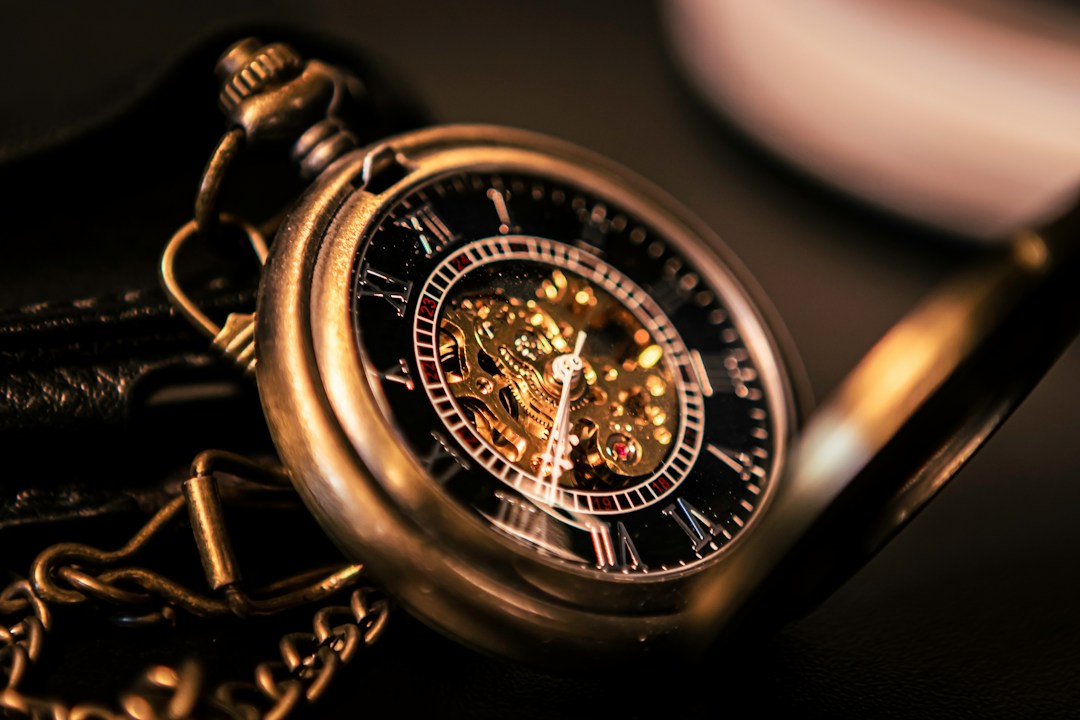
Image credit: Lucas Santos via Unsplash. Image used as a visual illustration of time, causality and conflicting timelines.
SEO image alt text: Antique pocket watch representing the Grandfather Paradox and conflicting timelines.
Image description: An antique pocket watch symbolises the mystery of travelling through time and the conflicting timelines created by the Grandfather Paradox.
Keywords: grandfather paradox, time travel paradox, causality, time travel theory, alternate timelines
Leave a Reply