SEO title: How Could a Real Time Machine Work? | Time Travel Science
Meta description: Explore how a theoretical time machine might work, from relativity and quantum physics to fictional Clocker SAS technology.
Keywords: time machine, time travel, time travel science, quantum physics, relativity, Clocker SAS, future technology
Category: Time Travel / Science
Tags: Time Machine, Time Travel, Quantum Physics, Relativity, Science Fiction, Clocker SAS
Suggested featured image: A futuristic time machine inside a dark laboratory, glowing clocks and blue quantum-style energy surrounding the machine.
How Could a Real Time Machine Work?
From Einstein’s relativity and time dilation to wormholes, quantum physics and the fictional Clocker SAS, could humanity ever build a machine that changes our relationship with time?
The Dream of a Time Machine
For generations, the idea of a time machine has belonged largely to science fiction. A machine capable of transporting a person hundreds or thousands of years into the future — or even returning them to the past — sounds like something from a novel.
But the fascinating part is that modern physics has already demonstrated that time does not pass at exactly the same rate for everyone. Einstein’s theories of relativity predict that speed and gravity can alter the rate at which clocks tick.
“The faster you move relative to a motionless observer, the slower time passes for you.”
This is not merely an idea from science fiction. Atomic-clock experiments have measured extremely small differences in the passage of time caused by changes in speed and gravitational potential.

1. Einstein Already Gave Us One Form of Time Travel
The first important clue comes from special relativity. According to Einstein’s theory, an observer travelling at extremely high speed experiences less elapsed time than an observer who remains behind, assuming their paths through spacetime differ appropriately.
This phenomenon is called time dilation.
A simple example
Imagine two identical twins. One remains on Earth while the other travels in a spacecraft at a velocity extremely close to the speed of light. When the travelling twin returns, less time can have elapsed for the traveller than for the twin who remained on Earth.
This is sometimes called the twin paradox. The effect is small at ordinary speeds but becomes increasingly important as the spacecraft approaches the speed of light.
NIST reports that atomic-clock experiments have directly measured relativistic time differences. Relativity is also essential to the operation of GPS because satellite clocks experience both velocity-related and gravitational effects.
2. Gravity Can Change the Rate of Time
General relativity adds another remarkable possibility: gravity affects the passage of time.
A clock deeper within a gravitational field ticks at a different rate from a clock farther away from the gravitational source. The difference is tiny under ordinary conditions but can become much larger near extremely massive objects.
“Clocks tick a little faster if you’re a foot higher.”
In 2010, NIST researchers demonstrated gravitational time dilation using two extremely precise atomic clocks separated by approximately 33 centimetres. Later experiments pushed these measurements to even smaller scales.
This gives us an important scientific foundation for thinking about a time machine: space, motion, gravity and time are physically connected.

3. Could a Wormhole Become a Time Machine?
One of the most intriguing theoretical possibilities is the wormhole.
A wormhole is a hypothetical structure connecting two different regions of spacetime. Instead of travelling through the normal distance between two locations, a traveller could theoretically pass through a shortcut.
Some solutions of Einstein’s equations are associated with Einstein-Rosen bridges. Modern theoretical discussions of wormholes raise difficult questions about stability, causality, gravitational effects and the type of matter or energy that might be required to keep a traversable wormhole open.
The crucial problem
Having a mathematical solution does not mean that engineers can build the object described by that solution.
At present, there is no demonstrated technology capable of creating, stabilising and controlling a traversable wormhole.

4. What About Quantum Physics?
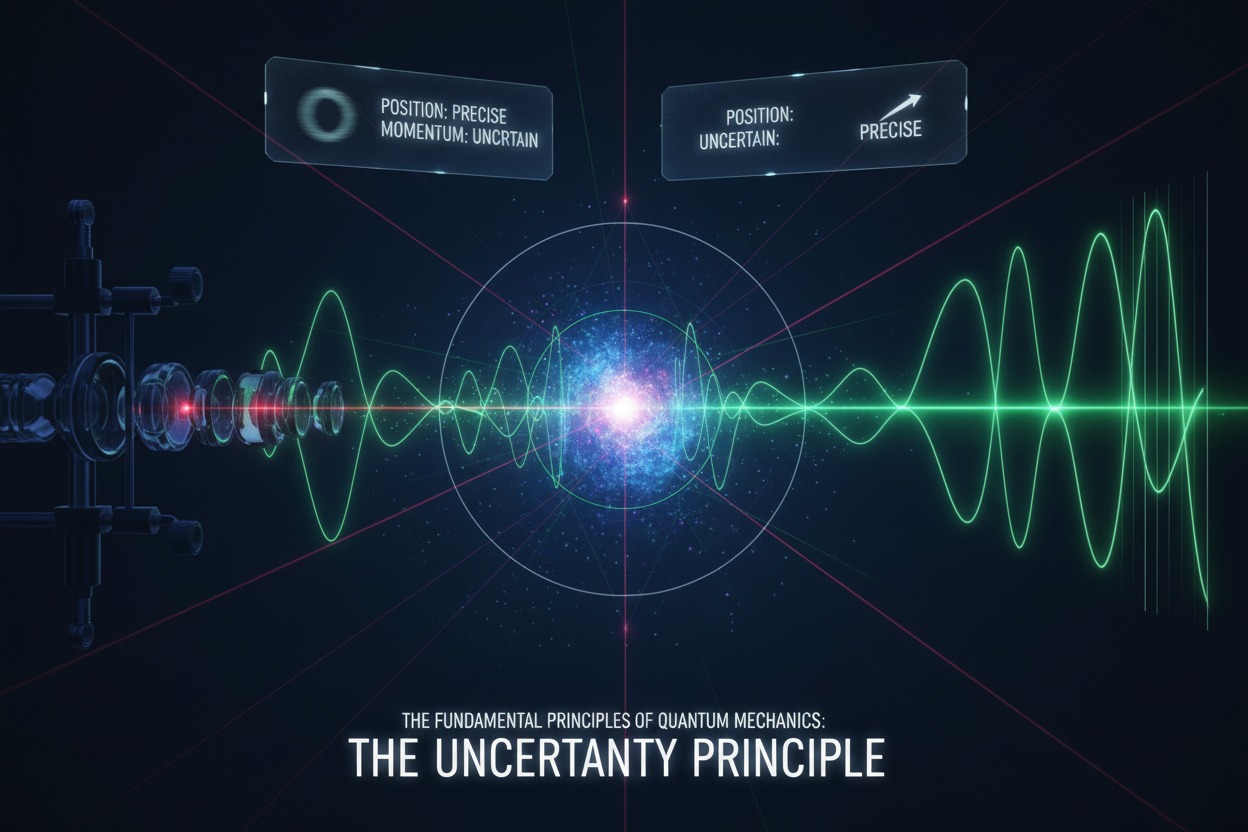
The next piece of the puzzle is quantum physics, the framework used to describe matter and energy at microscopic scales.
Quantum mechanics has produced phenomena that seem extraordinarily strange from an everyday perspective. However, it is important not to confuse quantum phenomena with evidence that people can travel through time.
Scientists are still trying to understand how gravity and quantum mechanics fit together. A successful theory of quantum gravity could potentially tell us much more about the fundamental structure of spacetime.
The biggest question may not simply be “How do we travel through time?” but “What is time actually made of?”
Modern atomic clocks are already exploiting quantum behaviour to measure time with extraordinary precision. NIST explains that atomic clocks use highly stable frequencies associated with atoms and light to define and measure time.
5. What Would a Real Time Machine Need?
If engineers eventually attempted to construct a genuine time-machine system, they would face enormous theoretical and engineering challenges.
- Extreme energy control: manipulating spacetime on a significant scale would require physical conditions far beyond current engineering.
- Precision clocks: an advanced machine would need extraordinary timing accuracy.
- Navigation through spacetime: reaching a particular destination would require knowing both where and when the machine was intended to arrive.
- Structural protection: any system involving extreme acceleration, radiation, gravitational fields or energy densities would present major engineering problems.
- Causality: travelling into the past raises deep questions about cause and effect.
6. Enter Clocker SAS — The Fictional Future
This is where the fictional world of Clocker SAS can take the scientific ideas much further.
Imagine a future organisation developing a spacecraft-sized temporal navigation system. Rather than simply pressing a button labelled “Past” or “Future”, the Clocker SAS machine could theoretically combine:
- ultra-precise atomic clocks;
- relativistic navigation;
- quantum sensors;
- advanced artificial intelligence;
- gravitational-field measurements;
- enormous energy-management systems; and
- a calculated spacetime destination.
In this fictional scenario, the machine would not “rewind” a universal clock. Instead, Clocker SAS could attempt to manipulate or exploit the geometry of spacetime itself.
Important: Clocker SAS is a fictional concept for storytelling and future technology exploration. It is not a currently demonstrated time-travel technology.
7. Could Humanity Ever Build One?
The honest scientific answer is that nobody currently knows how to build a machine capable of sending a human into the past.
Forward time travel in the relativistic sense is different. Time dilation is experimentally established, and spacecraft, aircraft and satellites experience measurable relativistic effects.
Going backwards in time is much more speculative. Proposed mechanisms such as traversable wormholes and closed timelike curves arise in theoretical physics, but no experimental demonstration has shown that humans can use them as a practical method of travelling into the past.
The fascinating part
We do not need to invent new physics to demonstrate that time can behave differently. Einstein’s relativity has already shown us that the passage of time depends on motion and gravity.
Conclusion: The First Step May Already Exist
A conventional science-fiction time machine remains beyond present-day engineering. Yet the underlying idea is not completely disconnected from real physics.
Relativity tells us that time is intertwined with space. Atomic clocks allow scientists to measure incredibly small differences in elapsed time. GPS technology has to account for relativistic effects. And physicists continue investigating the deepest relationship between gravity, quantum mechanics and spacetime.
Perhaps the future time machine will not look like a glowing chamber with spinning clocks. It might instead resemble an enormous scientific observatory, a particle accelerator, a spacecraft or something entirely unfamiliar.
“The machine of tomorrow may begin with something as simple as learning to measure time more precisely today.”
And that leaves an intriguing question for the next chapter of the Clocker SAS story:
What if the first real time machine is already being invented — one experiment at a time?
Scientific Sources & Further Reading
-
NASA — Is Time Travel Possible?
NASA explains relativity, time dilation and the difference between science-based time travel and science fiction.
NASA Space Place: Is Time Travel Possible? -
NIST — Putting Einstein to the Test
Information about experimental tests of special and general relativity, including atomic clocks and GPS.
NIST: Putting Einstein to the Test -
NIST — How Do Atomic Clocks Work?
Explanation of how atomic clocks use atomic frequencies and quantum physics to measure time.
NIST: How Do Atomic Clocks Work? -
NIST — Relativity and Optical Clocks
Research describing measurements of relativistic time dilation using optical atomic clocks.
NIST: Relativity and Optical Clocks -
Wikimedia Commons — Spacetime Curvature
Illustration of spacetime curvature.
Wikimedia Commons -
Wikimedia Commons — Einstein Train Thought Experiment
Illustration of Einstein’s relativity-of-simultaneity thought experiment.
Wikimedia Commons -
Wikimedia Commons — Einstein-Rosen Bridge Model
Two-dimensional illustration of a theoretical wormhole.
Wikimedia Commons
Image and copyright note: Images used in this article are referenced from Wikimedia Commons. Please retain the individual photographer/creator attribution and licence information when downloading or republishing the images. Always check the current licence on the original Wikimedia Commons page before commercial use or modification.
Editorial note: Scientific statements in this article are based on the cited NASA and NIST material. Clocker SAS is presented as fictional technology and should not be interpreted as an existing scientific project or demonstrated technology.
cars (1) Causality (1) Clocker SAS (1) Featured (8) Future Computing (1) Grandfather Paradox (1) how time travel works (1) html (1) influence (1) is time travel possible (4) Java (8) Mission 2127 (1) Orbital Computing (1) planes (1) Project Suncatcher (1) python (9) python time travel (9) Quantum Realities: (1) Quantum Theory (1) science of time travel (16) Space AI (1) Space Technology (2) Timeline (1) time travel (18) time travel explained (14) time travel physics (3) time travel theory (12) trains (1) Unraveling the Mysteries of Modern Physics (8)
- Category 1 (1)
- Category 2 (1)
- Category 3 (1)
- New time-travel.space (20)
- Time Travel (18)
- Quantum Theory (1)
- Science & Technology (16)
- Time Travel (18)
-
1. The Time Machine: How Could It Actually Work?
1. The Time Machine: How Could It Actually Work? SEO title: How Could a Real Time Machine Work? | Time Travel Science Meta description: Explore how a theoretical time machine might work, from relativity and quantum physics to fictional Clocker SAS technology. Keywords: time machine, time travel, time travel science, quantum physics, relativity, Clocker SAS,…
Leave a Reply