

CLOCKER SAS • MISSION FILE 2127 • FICTION SERIES
Clocker SAS Mission 2127: The Signal from Tomorrow
The team returned from 2126. But a message from the future had already started the next mission.
Previously in the Clocker SAS story: Commander Alex Morgan and the team travelled to the year 2126, encountered a mysterious guardian of historical continuity and returned to their own time. Their mission computer then displayed a warning: Mission 2127 already underway. Now the warning has become a signal—and it is coming from a date that should not yet exist.
This is a fictional instalment in the Clocker SAS Mission to 2126 universe. The organisation, characters, temporal technology and events are imagined. Scientific notes and links are included to distinguish real research from the story.
The message that arrived before it was sent
The Clocker SAS laboratory had been sealed since the return of Mission 2126. Commander Alex Morgan stood beside the main console, watching the unexplained file blink on the central display.
MISSION 2127 — STATUS: UNDERWAY.
Dr Eleanor Vale, the mission’s theoretical physicist, checked the system logs. There was no incoming connection, no recorded transmission and no external device attached to the network.
“The computer says the mission has started,” Vale said. “But nobody has authorised a launch.”
Then the display changed. A line of text appeared, followed by a time stamp dated one hundred years ahead.
TRANSMISSION ORIGIN: 01 OCTOBER 2127
The message contained only nine words:
“Do not follow the signal. It is following you.”
For several seconds, nobody moved. The Clocker team had built its fictional temporal gateway to observe a future destination and return. It had never been designed to receive communications from that destination—least of all communications apparently sent before the mission began.
A new mission control protocol
Morgan ordered the laboratory placed into isolation. The team disconnected external networks and moved the mission computer onto a separate, shielded system. The signal remained on the screen.
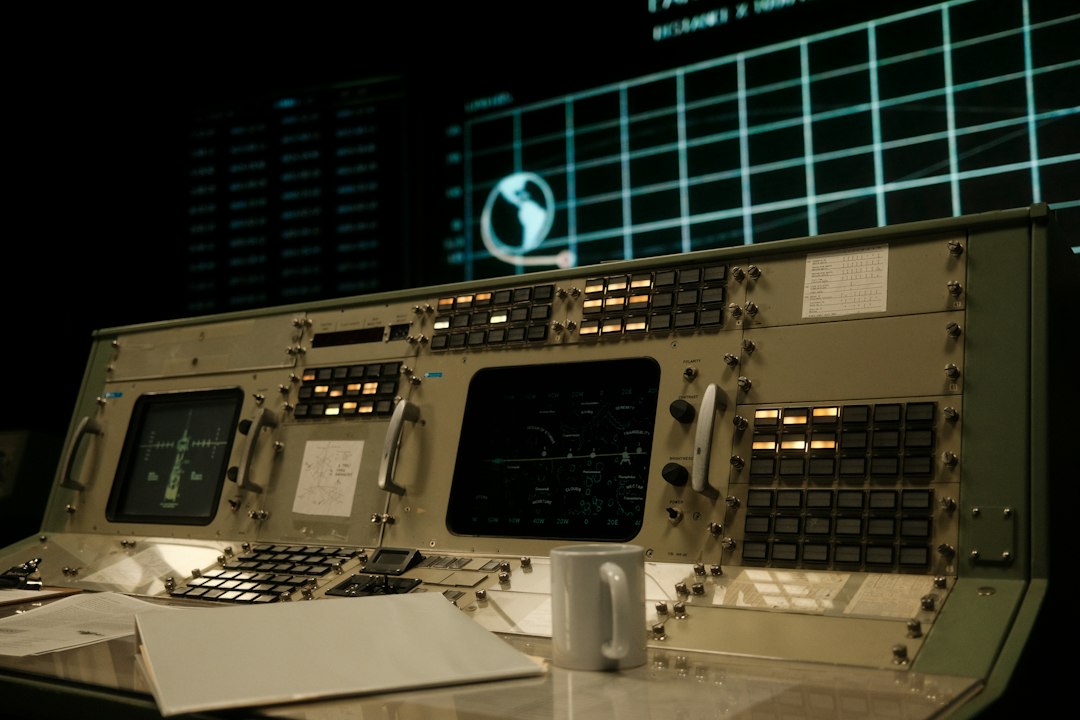
Vale proposed a cautious test. Rather than activate the temporal chamber, the team would ask the signal a question using a one-way diagnostic pulse. If the reply contained information that could not have been generated by the local system, they would preserve the evidence and stop.
The computer translated the pulse into a simple question: Who is sending this?
The reply arrived almost instantly:
“You are.”
Morgan looked at Vale. “That is impossible.”
“It is certainly unexplained,” she replied. “We must not confuse a strange computer message with proof of time travel. First we find out whether this is a fault, a forged data packet or something we cannot yet account for.”
The science behind a message from the future
In real physics, information travelling backwards through time is not an established capability. Einstein’s relativity does show that elapsed time can differ between observers because of relative motion and gravity. Those effects are measured and must be considered in technologies such as satellite navigation. They do not provide a known method for sending a message into yesterday.
Some mathematical discussions of general relativity examine unusual spacetime geometries, including hypothetical closed timelike curves. These are theoretical constructs, not working communication channels. No experiment has demonstrated a controllable signal from the future.
For the Clocker SAS story, the signal is therefore a fictional mystery. The team’s investigation borrows its vocabulary from real questions about causality, precision timing, information and the structure of spacetime—but the event itself is invented.
The coordinates hidden inside the signal
Vale’s diagnostic programme separated the transmission into three layers. The first was a short identification code. The second was a sequence of clock readings. The third looked like a set of navigation coordinates.
The coordinates pointed to a place the team recognised: the old Clocker research site, exactly where the temporal chamber stood. But the final line named a different destination.
01:27:00 — 01 JANUARY 2127
It was not simply a date. It was a rendezvous time, one year after the future visit that had started the mystery.
Then the room lights dimmed. The mission computer, still isolated from every external network, printed a final instruction:
“Bring the original clock. Leave the copy behind.”
The original clock
In the centre of the laboratory stood the instrument used to synchronise the team’s mission timers: a precision atomic clock. It had recorded the laboratory’s time before, during and after the fictional journey to 2126.
In the real world, atomic clocks are among the most accurate timekeeping instruments ever built. They use the regular frequencies associated with transitions in atoms to measure time. Scientists use them to test fundamental physics and support systems that depend on precise timing.
In the story, Vale wondered whether the transmission was somehow tied to the clock’s record of the first mission. Perhaps the signal was not travelling through time at all. Perhaps it was an encrypted message hidden in data the team had overlooked.
That explanation was less dramatic—but it was the first one they could test.
A decision that cannot be rushed
Morgan gathered the team. The original clock would be removed from the chamber and examined in a separate laboratory. No one would enter the temporal platform. No destination would be programmed. The signal would be preserved, independently analysed and compared with the original mission logs.
“We are not launching because a screen tells us to,” Morgan said. “We verify the evidence first.”
Vale nodded. “And if the message really is from 2127?”
“Then we have a much bigger question than where to travel.”
The second transmission
At 01:27 the following morning, the isolated computer woke by itself. The screen displayed a new message. This time it included a name.
ALEX MORGAN — MISSION COMMANDER
Below it was a short sentence:
“When you reach 2127, do not trust the person who returns with you.”
Morgan slowly turned towards the observation window. The laboratory was empty except for the team. Yet in the reflection, for one brief moment, he thought he saw a second figure standing behind him.
He turned around.
There was nobody there.
Mission file: what happens next?
The Clocker SAS team has not yet launched Mission 2127. Its next task is to establish where the mysterious signal came from, whether the original mission clock contains hidden information and why the message names Commander Morgan.
The next instalment will follow the investigation into the clock data and the identity of the mysterious returning passenger. The mission remains fictional, but its questions connect to real scientific themes: how we measure time, how information is protected and what evidence would be needed to support an extraordinary claim.
Continue the Clocker SAS story
Read the earlier instalments:
- The Clocker SAS Mission to 2126 — the first journey
- Could a Real Time Machine Ever Be Built? — the science behind the story
Real science and further reading
NIST — Atomic Clocks: how atomic clocks measure time with exceptional precision.
NIST — Putting Einstein to the Test: experiments examining how motion and gravity affect time.
NASA Space Place — Is Time Travel Possible? an accessible introduction to time dilation and relativity.
NASA — Technology: current research and engineering that inspire future-spacecraft ideas.
Image credits: Space shuttle image by NASA via Unsplash; mission-control photograph by Patrick Konior via Unsplash. Both images are illustrative editorial photographs. They do not depict the fictional Clocker SAS machine, its crew or a real mission to 2127.
Clocker SAS Mission Files — a fictional series exploring possible futures through science, imagination and adventure.
Copyright © 2026 Simon Ben Gemmill. All rights reserved.
SEO TITLE
Clocker SAS Mission 2127: The Signal from Tomorrow | Time Travel Fiction
META DESCRIPTION
Continue the Clocker SAS time-travel series as Commander Morgan receives a mysterious message from 2127. A science-fiction mystery inspired by real physics.
SEO KEYWORDS
Clocker SAS, Mission 2127, time travel fiction, time travel story, year 2126, future mission, atomic clocks, artificial intelligence, relativity, science fiction
CATEGORY HIERARCHY
New time-travel.space → Time Travel → Science & Technology
TAGS
Clocker SAS, Mission 2127, Featured, Time Travel, Science of Time Travel, Time Travel Physics, Space Technology
Leave a Reply