
Could another version of reality exist alongside ours — and, if it did, would it be above Earth, below it, or somewhere beyond ordinary space?
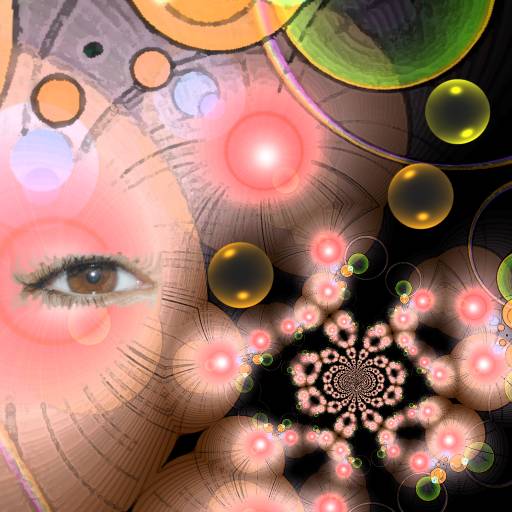
Parallel universes are a fascinating possibility at the boundary between physics and philosophy. The idea is not one single theory: “multiverse” is a name for several different proposals that suggest our observable universe might not be all that exists. Some arise from interpretations of quantum mechanics; others from theories about the very early expansion of the cosmos.
What does “parallel universe” mean?
In everyday language, a parallel universe sounds like another Earth where history unfolded differently. In physics, the term can mean something more abstract. A universe might be a region of space-time separated from ours, a branch in a quantum description, or a vast region beyond what light has had time to bring into view. These possibilities are not interchangeable, and none has been confirmed as a place people could visit.
“Some spheres may be causally disconnected from all other spheres.”
— NASA Astronomy Picture of the Day, explanation accompanying “Multiverses: Do Other Universes Exist?” (2010), by Robert Nemiroff and Jerry Bonnell. The sentence describes one possible multiverse picture, not an established observation. Read the NASA explanation.
Three scientific ideas that inspire the multiverse
1. The many-worlds interpretation of quantum mechanics
Physicist Hugh Everett III proposed a formulation of quantum mechanics in which the universal quantum state does not simply collapse to one outcome. The interpretation now called “many worlds” is often described as reality branching into different outcomes of quantum events. These branches are not thought of as ordinary planets stacked above and below each other; in the theory, they are different components of the quantum description and do not provide a known route for messages or travel between branches.
Everett’s foundational paper, “‘Relative State’ Formulation of Quantum Mechanics,” appeared in Reviews of Modern Physics in 1957. Read the original paper at the American Physical Society.
2. Eternal inflation and bubble universes
Some cosmological models suggest that the rapid expansion proposed for the very early universe could continue in some regions while ending in others. Regions where it ends might become “bubble” or “island” universes, potentially with different properties. This is a theoretical possibility, not a map of hidden worlds around Earth. If such regions exist, they may be so far away or so causally disconnected that contact is impossible.
The Stanford Encyclopedia of Philosophy’s entry on the philosophy of cosmology discusses eternal inflation and multiverse proposals, including the challenge of assigning testable probabilities to them.
3. Regions beyond the observable universe
The observable universe is limited by the distance light has travelled to us during the universe’s history, together with the expansion of space. There may be more universe beyond that horizon. However, distant regions beyond our observable horizon are not necessarily separate universes: they could simply be parts of the same larger cosmos that we cannot currently observe.
Would a parallel Earth be above us or below us?
This is an intriguing image to imagine: perhaps another Earth lies directly “above” ours, while a mirror world lies “below.” But “above” and “below” are directions defined locally by gravity. In space, there is no universal up or down. Scientists have no evidence that a parallel Earth occupies a hidden layer immediately above or beneath our planet.
If a parallel reality were a separate quantum branch, it would not have a known physical position in the sky or under the ground. If it were a distant bubble universe, it would be a region of space-time rather than a world sitting like a second floor above Earth. Some speculative extra-dimensional models imagine additional dimensions, but they do not establish that another inhabited Earth is hovering just out of sight.
Could it interact with Earth?
For a parallel universe to affect Earth, there would need to be some physical mechanism connecting it to our universe. At present, no confirmed mechanism allows people, objects, signals, or energy to pass between the branches of the many-worlds interpretation or between causally disconnected bubble universes.
- Gravity: It is sometimes suggested that unseen matter or extra dimensions could leave gravitational signatures. Such ideas are subjects of theoretical research, not evidence that a parallel Earth is pulling on our planet.
- Quantum effects: Quantum mechanics produces real and measurable effects, but no experiment has demonstrated communication with another branch of reality.
- Early-universe clues: Researchers have considered whether collisions between hypothetical bubble universes might leave patterns in the cosmic microwave background. No such signal has been established as proof of another universe.
- Wormholes and portals: These appear in mathematical discussions and science fiction, but traversable portals to parallel universes have not been demonstrated.
How could scientists test the idea?
A scientific proposal becomes stronger when it makes predictions that can be checked. Researchers would need a distinctive, repeatable observation that competing explanations could not account for as well. Depending on the model, possible avenues include precise measurements of the cosmic microwave background, tests of gravity at small distances, or experiments that probe the foundations of quantum mechanics. The difficulty is that many multiverse proposals make little or no unique prediction that current instruments can test.
NASA’s multiverse explainer notes this central limitation: some hypotheses are difficult to test or falsify. That does not make them automatically false, but it means they should be treated as speculative until evidence can distinguish them from alternatives.
So, does another Earth exist?
We do not know. Parallel universes remain a serious topic in some areas of theoretical physics, but the evidence does not show that another Earth exists above or below ours, nor that it interacts with our world. The most accurate answer is both exciting and cautious: some mathematical frameworks permit multiverse-like pictures, yet there is currently no confirmed observation of a parallel universe.
Perhaps the most useful way to picture the idea is not as a hidden planet directly overhead, but as a question about the deepest structure of reality — and about what future experiments might allow us to know.
Image credit and further reading
- Image credit: Clifford Pickover, illustration featured with NASA Astronomy Picture of the Day, “Multiverses: Do Other Universes Exist?” (14 November 2010). NASA page and credit. Image file source: University of Wisconsin–Madison physics website.
- Hugh Everett III: “‘Relative State’ Formulation of Quantum Mechanics,” Reviews of Modern Physics (1957), American Physical Society. Original paper and publication details.
- Stanford Encyclopedia of Philosophy: “Philosophy of Cosmology.” Authoring and editorial details are provided on the entry page. Read the resource.
- Robert Nemiroff and Jerry Bonnell: NASA Astronomy Picture of the Day editors/authors for the 2010 NASA explanation. Source page.
Article author: Simon Ben Gemmill. Site: time-travel.space.
Editorial note: This article explains scientific hypotheses and clearly distinguishes them from confirmed evidence. The short quotation above is attributed to NASA; the remaining resource material is paraphrased and linked.
Leave a Reply