
Science-fiction research project | Clocker SAS / Planetary Science
What if the safest place to search for clues about life beyond Earth were hidden beneath another world’s surface? ASTRA-CAVES is a fictional research project grounded in real planetary science. Every numerical result and mission outcome in this article is invented for storytelling and demonstration; none is a real space-agency finding.
Abstract: Worlds Beneath the Surface
Planetary caves could protect instruments and preserve clues about geological history. On Earth, lava tubes and ice caves form through well-understood processes. Scientists have also investigated ways to detect underground voids and studied cave environments as analogues for exploring Mars. Meanwhile, Europa’s ice-covered ocean and Titan’s rich organic chemistry make them compelling—but very different—targets for future research.
In this imagined study, the ASTRA-CAVES team compares cave-like environments on Mars, Jupiter’s moon Europa and Saturn’s moon Titan. Laboratory analogues, computer simulations and a fictional autonomous rover called Astra-1 are used to examine radiation shielding, temperature stability, chemical measurements and robotic navigation. The goal is not to claim that life has been found, but to identify which environment might be the most useful target for a future mission.
The Research Question
Which type of extraterrestrial cave offers the best balance of physical protection, scientific value, possible habitability and robotic accessibility?
- Could rock or ice shield equipment from some surface hazards?
- Could a cave preserve chemical traces of past environmental conditions?
- What measurements could distinguish ordinary geology from a possible biosignature?
- How can robotic explorers avoid contaminating a site of astrobiological interest?
Three Very Different Worlds
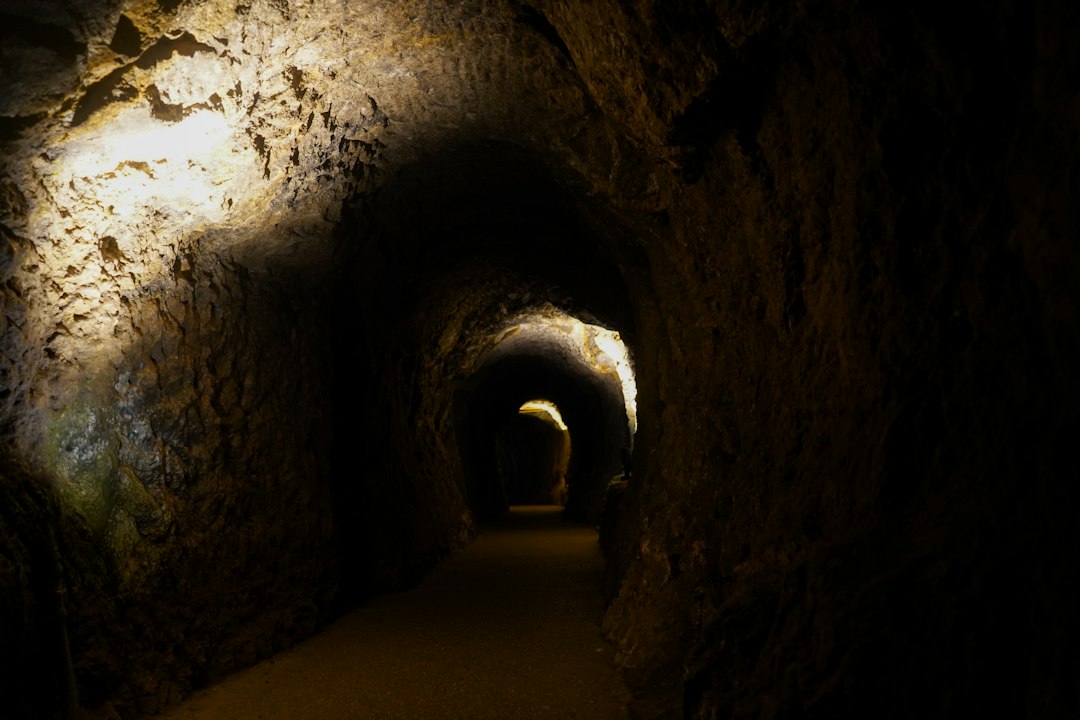
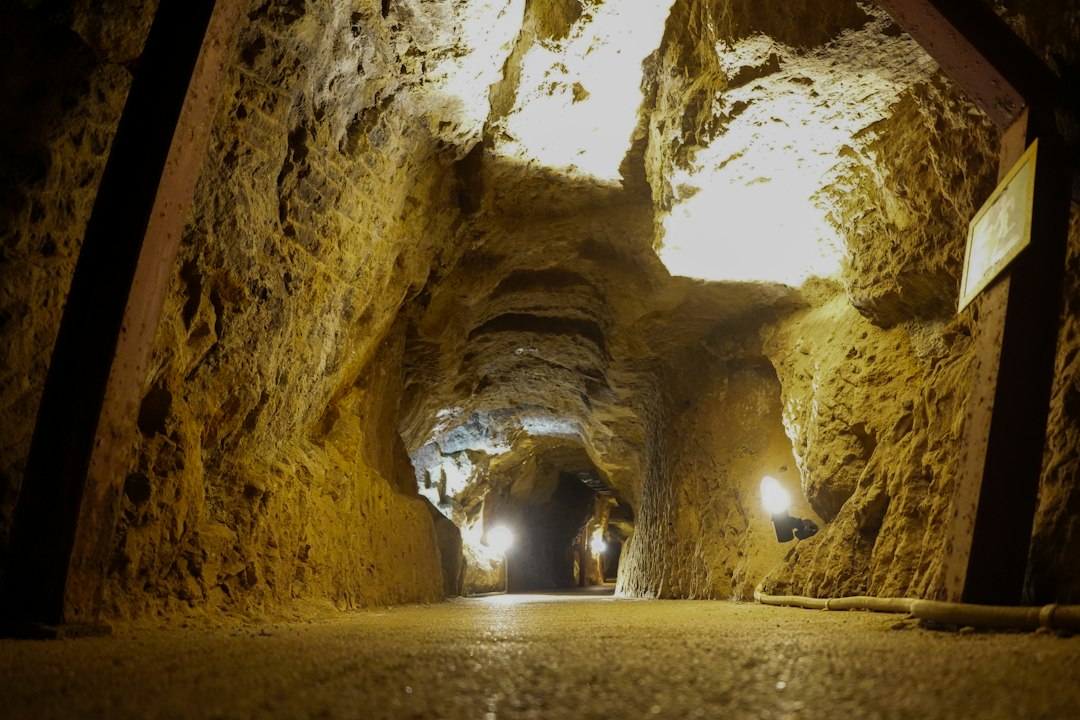
Mars: the volcanic cave. Ancient lava flows can leave hollow tubes. A Martian lava tube could provide a sheltered place to study rocks and climate history, although its actual size, stability and internal conditions would have to be measured at the site.
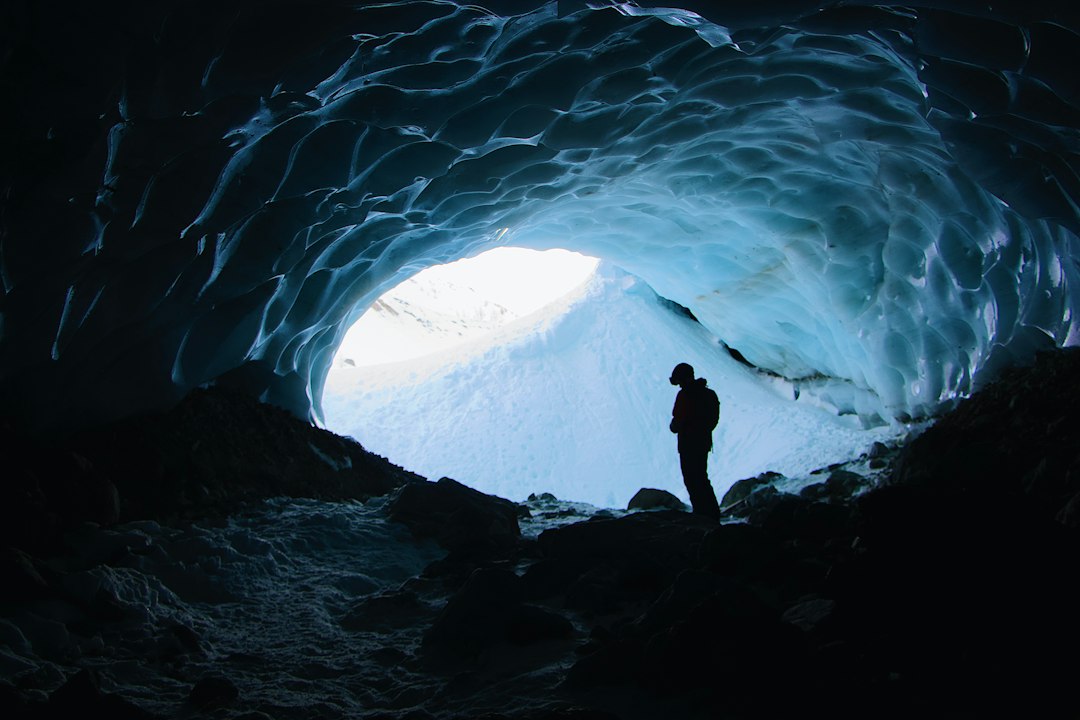
Europa: the icy cavity. Europa is believed to have a salty ocean beneath its ice shell. A cavity in the ice would not automatically connect to that ocean, and its temperature, chemistry and accessibility remain unknown. Its scientific importance comes from the broader question of how water, chemistry and energy interact on ocean worlds.
Titan: the organic-chemistry frontier. Titan has a dense nitrogen-rich atmosphere, lakes and rivers of liquid methane and ethane, and water ice that behaves like rock in its extreme cold. It offers a natural laboratory for studying complex organic chemistry, though organic compounds are not evidence of life by themselves.
Methodology: Four Simulated Experiments
The fictional team uses Earth-based analogue chambers and computer models. These experiments are proposed methods for the story, not a report of laboratory work that actually took place.
Experiment 1 — Radiation shielding
A calibrated detector is compared in an open configuration and behind different thicknesses of basalt-like material. In a real experiment, researchers would control the source and detector geometry and account for particle energies, secondary radiation and material composition.
Experiment 2 — Thermal stability
Three insulated chambers represent a rock cave, an icy cavity and a Titan-like cold environment. Sensors record temperatures through a simulated 24-hour external cycle. Thermal stability alone cannot show that liquid water exists; pressure, heat flow and local chemistry matter too.
Experiment 3 — Chemical habitability
Simulated mineral and ice samples are checked for organic compounds, mineral composition and signs of oxidation-reduction chemistry. A positive organic-molecule result is treated as a chemical observation, not proof of biology. Any real mission would require strict contamination controls.
Experiment 4 — Rover navigation
The fictional Astra-1 rover uses stereo cameras, lidar, inertial sensors and a miniature spectrometer. It attempts 20 routes in each model cave. A route counts as successful only if the rover reaches its target and returns to a designated safe point without violating its hazard limits.
Invented Findings: What the Simulation Reports
Important: The following values are entirely fictional, created to illustrate how results could be presented. They are not measurements from Mars, Europa, Titan, NASA or any real laboratory.
Result A — relative radiation readings
| Model configuration | Relative detector reading | Modelled reduction |
|---|---|---|
| Open surface control | 100 units | 0% |
| 0.5 m basalt-like material | 76 units | 24% |
| 1.5 m basalt-like material | 49 units | 51% |
| 3.0 m basalt-like material | 31 units | 69% |
In this simplified fictional model, thicker rock lowers the detector reading. Real shielding calculations are more complex because particle energy, rock composition and secondary particles influence the result.
Result B — temperature ranges
| Simulated environment | Lowest | Highest | Range |
|---|---|---|---|
| Martian rock-cave model | −42°C | −38°C | 4°C |
| Europa ice-cavity model | −158°C | −157°C | 1°C |
| Titan cold-cavern model | −178°C | −176°C | 2°C |
The invented chambers are thermally stable, but the Europa and Titan models remain extremely cold. Stability does not mean that a cave is warm enough for liquid water.
Result C — hypothetical chemical detections
| Simulated measurement | Mars analogue | Europa analogue | Titan analogue |
|---|---|---|---|
| Samples with organic compounds | 12/30 | 18/30 | 21/30 |
| Samples with measurable redox activity | 9/30 | 15/30 | 7/30 |
| Samples with a water-related signal | 8/30 | 24/30 | 2/30 |
In this made-up dataset, Titan has the most organic-compound detections and Europa has the most water-related signals. Neither result would establish that life exists. Organic chemistry can occur without biology, and a water-related signal must be carefully defined and independently verified.
Result D — autonomous navigation
| Model environment | Successful routes | Success rate |
|---|---|---|
| Mars lava-tube model | 18/20 | 90% |
| Europa ice-cavity model | 11/20 | 55% |
| Titan cavern model | 15/20 | 75% |
The imaginary rover performs best in the Mars model, while the Europa model produces more failures due to simulated low visibility and ice fractures. With only 20 trials per environment, these results would be preliminary even if they were real.
Mission Proposal: Astra-1
The proposed rover carries a compact six-wheel chassis, lidar, stereo cameras, temperature and radiation sensors, a miniature spectrometer and a small sampling arm. A tether or relay system helps communications around bends. Its autonomy software is programmed to stop or retreat when navigation confidence falls below a defined safety threshold.
- Stage 1: Use orbital imagery and topography to identify possible entrances.
- Stage 2: Survey the entrance and assess stability before descent.
- Stage 3: Map the interior and collect repeated environmental measurements.
- Stage 4: Analyse carefully selected samples and preserve controls for contamination checks.
- Stage 5: Compare results against non-biological explanations before making any claim about biosignatures.
Limitations and Planetary Protection
- No real extraterrestrial cave data were collected for this project.
- Earth-based rock and ice analogues cannot reproduce every planetary condition.
- Radiation shielding depends on particle spectra, geometry and material composition.
- Organic compounds and chemical disequilibrium are not, by themselves, proof of life.
- A real mission would require instrument calibration, uncertainty estimates, reproducible methods and independent verification.
- Planetary-protection measures would be essential to reduce the risk of contaminating environments of astrobiological interest.
Conclusion: Which Cave Should We Explore First?
Within the fictional results, Mars offers the most practical first robotic target, Europa is the strongest candidate for investigating water-related habitability, and Titan provides an unusual setting for studying organic chemistry. These rankings are illustrative, not scientific conclusions about real mission sites.
The central lesson is that finding a cave, finding organic material and finding life are three different achievements. A credible mission must test each claim with appropriate instruments and independent checks. For a Clocker SAS science-fiction film, that discipline can also create suspense: the most important discovery is the one that survives every attempt to explain it away.
Real Science: Further Reading
- NASA — How Exploring Hawaiian Caves Helps NASA Search for Life on Mars
- NASA — Research into potential underground shelter on the Moon and Mars
- NASA — Europa Clipper mission
- NASA — Titan facts
Image credits: Cave tunnel photo by Yosuke Ota; frozen-cave photo by Maël BALLAND. Both via Unsplash. These are Earth photographs used as analogues, not planetary mission images.
SEO title: ASTRA-CAVES: Could Alien Caves Hide Clues to Life? | Clocker SAS
SEO description: Explore fictional research into caves on Mars, Europa and Titan, with invented experiments, data tables, a robotic rover and real planetary science references.
Focus keyphrase: caves on other planets
Keywords: planetary caves, Mars lava tubes, Europa ice shell, Titan organic chemistry, astrobiology, fictional research project, Clocker SAS, Astra-1 rover, science fiction film
Explore More from Time-Travel.space
-

The Year That Never Happened | A Clocker SAS Mystery
Clocker SAS discovers a missing year in history. Records disappear, memories conflict and the team must discover what…
-

Time Travel Explained: The Science, Theories and Possibilities
Could we travel through time? Discover what relativity really tells us, why travel to the past remains speculative,…
-

What If We Could Send Messages Into the Past?
Imagine sending information backwards through time. Explore the scientific challenges, paradoxes and possibilities of communication across history.
Leave a Reply